
Understanding Restrictive Practices: Seclusion
A practical look at what seclusion is, what it isn’t, and what the rules are across the NDIS and Australia.

This article is for families, support coordinators, support workers, allied health professionals, and anyone supporting a person with a disability. This article provides a clear explanation of one of the most serious tools in the restrictive practices framework, why it matters, and where the line sits between keeping someone safe and breaking the rules.
At the end of this article, you will know:
• What restrictive practices are and where seclusion fits within them
• What counts as seclusion and what doesn’t, including the difference between seclusion and staff retreating to safety
• The current rules in Australia, including the recent prohibition on seclusion of children and young people in three states
What are restrictive practices?
A restrictive practice is any intervention that limits the rights or freedom of movement of a person with a disability. Under the NDIS (Restrictive Practices and Behaviour Support) Rules 2018, there are five regulated restrictive practices:
• Seclusion
• Chemical restraint
• Mechanical restraint
• Physical restraint
• Environmental restraint
Each of these comes with strict reporting requirements, authorisation requirements, and an underlying principle that runs through all of them. A restrictive practice should only be used as a last resort, for the shortest possible time, in the least restrictive form, and only to prevent harm to the person or others. It should always sit alongside a Behaviour Support Plan that aims to reduce or eliminate the need for it over time.
Seclusion is the practice this article focuses on. It is also the one most often misunderstood by the people most likely to encounter it.
What is seclusion?
Section 6(a) of the NDIS (Restrictive Practices and Behaviour Support) Rules 2018 defines seclusion as:
“The sole confinement of a person with disability in a room or a physical space at any hour of the day or night where voluntary exit is prevented, or not facilitated, or it is implied that voluntary exit is not permitted.”
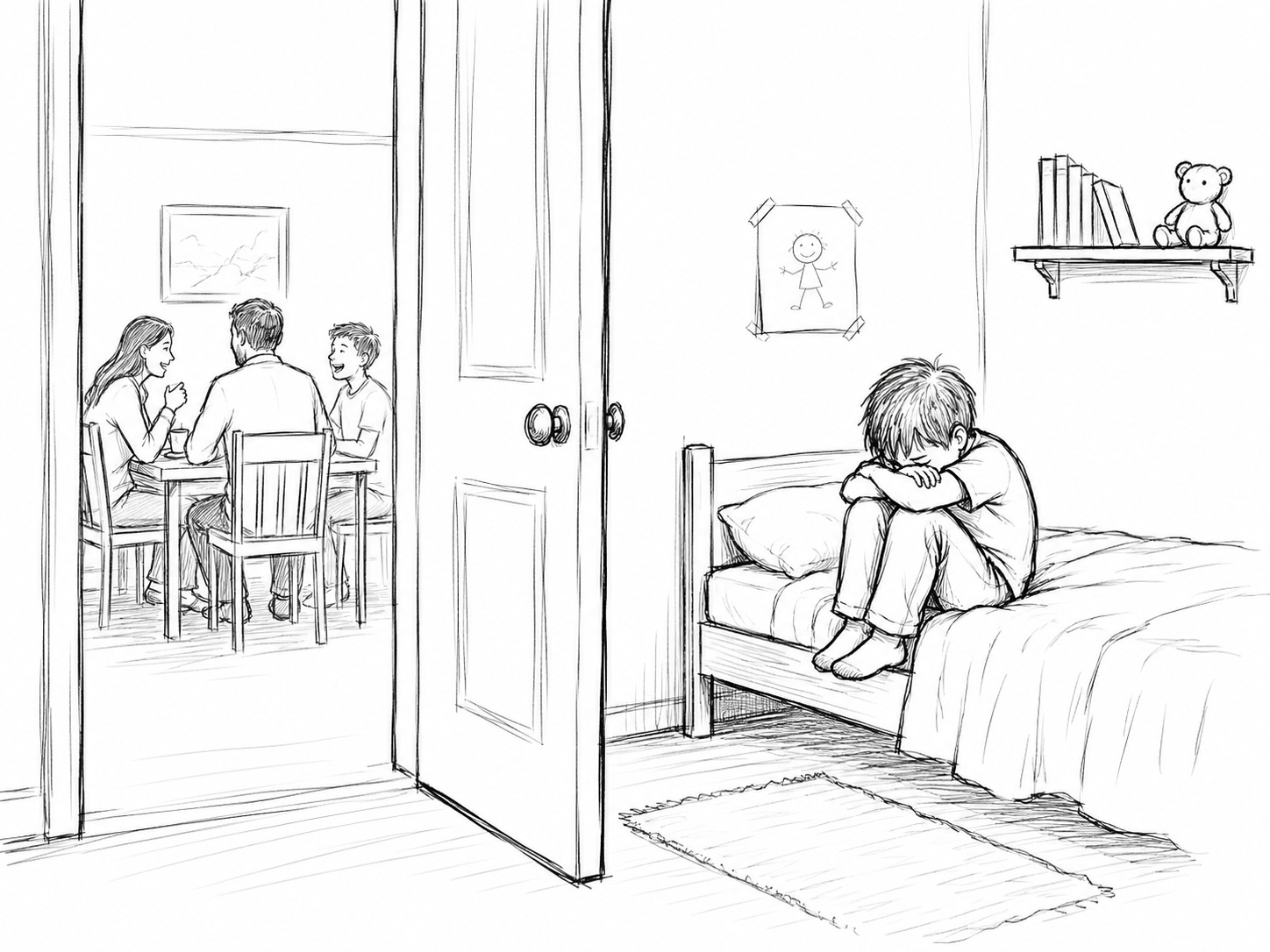
In plain English, seclusion is when a person with a disability is alone in a space and is either prevented from leaving, not helped to leave, or made to believe that they are not allowed to leave.
That last part matters. People often think seclusion only applies when a door is locked. It doesn’t. If the door is unlocked but the person believes they are not allowed out, that is still seclusion. If a barrier is in place that the person cannot get through, or that puts them off trying, that is still seclusion. If the windows are unlocked but the door is locked, that is still seclusion. It is not reasonable to expect a person to leave a room through a window.
The test is not whether the door is locked. The test is whether the person can freely leave, knows they can, and feels safe doing so.
Examples of seclusion
Some practical examples of what seclusion can look like in a disability support setting:
Time out in a room the person cannot leave.
A common one. The person is placed in a room or area alone to “calm down” and cannot exit. Even if no one says the words “you can’t leave,” the act of putting them there and waiting outside is seclusion.
A locked room or space.
Whether that’s a bedroom, a bathroom, an outdoor area, or a section of a house. If they are alone and cannot leave, it is seclusion.
A half door or barrier they cannot get past.
Anything that physically prevents exit, or strongly deters it, falls within the definition.
Being sent to a room until they are “calm.”
If the person believes they are not allowed to come out until they have calmed down, that is seclusion. Even if no one is physically holding the door shut.
Staff and other residents retreating to a separate part of the house.
If the person is left in part of the property they cannot exit, with no access to anyone else, that is seclusion. The yard counts too, if they cannot leave the property or get back inside.
It is also worth noting what is not seclusion. A person choosing to lock the bathroom door for privacy is not being secluded. A person alone in their own home choosing to lock the front door for safety is not being secluded. The difference is choice and the ability to leave at any time.
Seclusion vs staff retreating
This is one of the most common areas of confusion, so it is worth pulling apart carefully.
Staff retreating in response to a behaviour of concern is not, by itself, a restrictive practice. It is a Worksafe expectation that staff can remove themselves from physical danger. A person does not have an automatic right to access a staff-only area such as an office. Restricting access to those areas is not a restrictive practice in itself.
It becomes a restrictive practice when one of two things happens.
It becomes environmental restraint when staff retreat into a locked room that the person would normally have access to. For example, if staff move to another part of the house and lock the hallway door, that locked area is no longer available to the person. That is a restriction on their environment.
It becomes seclusion when the person is then left alone, unable to exit the house, with no access to anyone else. Or when the person does not know they can leave, or it is implied that they cannot. Even with no one physically holding them in, the conditions for seclusion can still be met.
The Victorian Senior Practitioner’s guidance is clear on this. The question to ask is whether the person can leave the space they are in, whether they know it, and whether all the doors and gates between them and the outside world are unlocked.
If staff have retreated, the person is calm enough to move freely, the doors are unlocked, and the person can voluntarily leave the home if they choose to, that is not seclusion.
If any one of those conditions is not met, it is.
Seclusion NDIS Regulations
Seclusion is a regulated restrictive practice under the NDIS Rules. That means it must be reported to the NDIS Quality and Safeguards Commission every time it is used. It must also be authorised under the relevant state or territory framework, and it must be detailed in a Behaviour Support Plan that is being actively worked on to reduce or eliminate its use.
In Victoria, Part 7 of the Disability Act 2006 sets out specific requirements for any use of seclusion. If seclusion is being used lawfully, the person must be provided with:
• Bedding and clothing appropriate to the circumstances
• Adequate heating or cooling
• Food and drink at appropriate times
• Adequate toilet arrangements
The Behaviour Support Plan must clearly state how the seclusion is initiated and ended, the maximum number of times per day it can be used, and the maximum length of each episode. The person must not be secluded for any longer than is necessary to prevent harm.
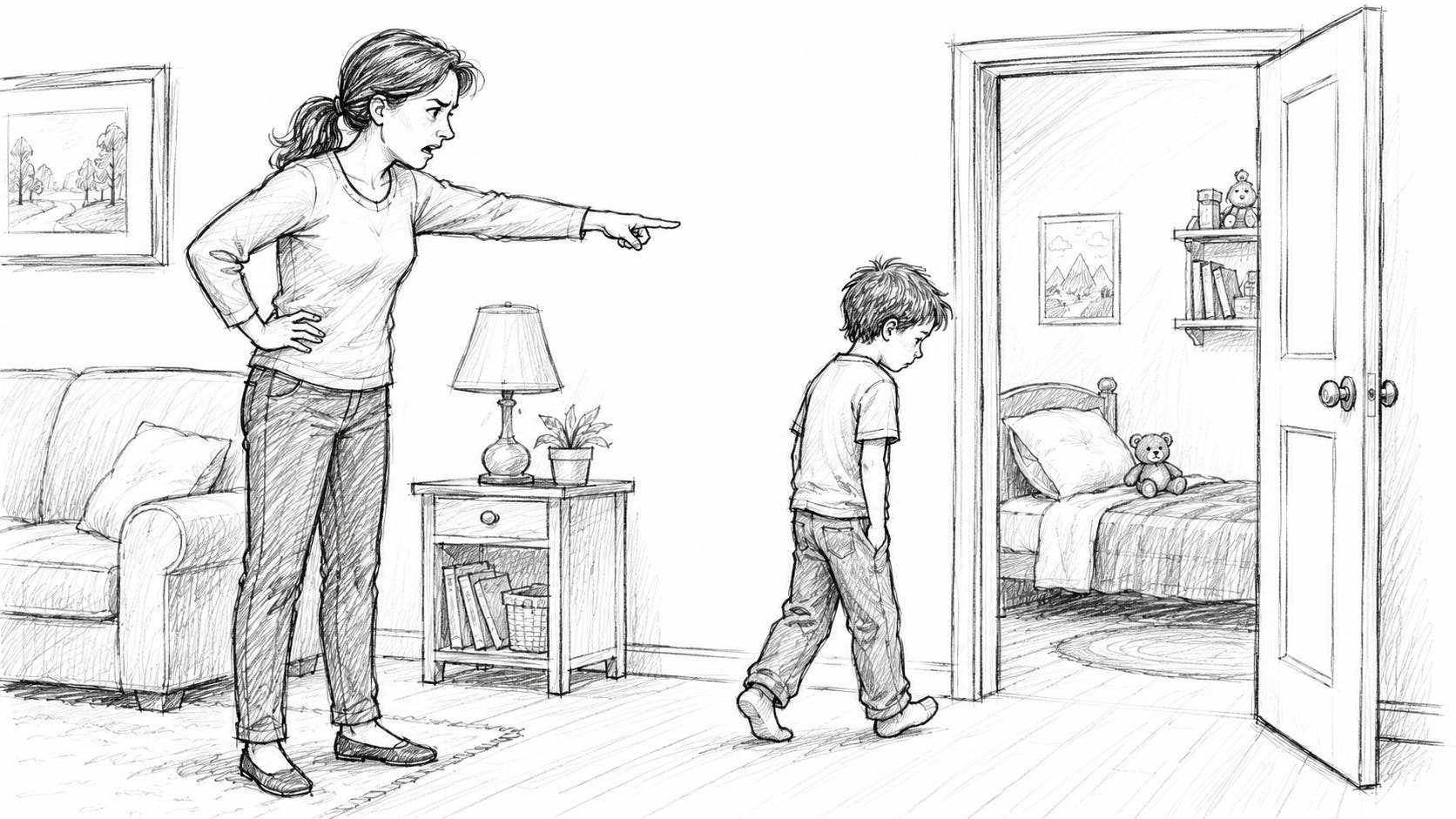
A few other points worth knowing.
Parents and guardians cannot direct a provider to seclude a person. Disability service providers are responsible for the use of restrictive practices, not the family. Even when a parent or guardian asks for it, the provider must follow the rules in Part 7 of the Disability Act.
A person requesting seclusion does not change its legal status. The law makes no distinction. If the conditions of seclusion are met, it is still seclusion and still subject to the same rules.
Three Australian states now prohibit seclusion of children and young people with a disability. As of November 2024, the Victorian Senior Practitioner has issued a Direction prohibiting the use of seclusion on persons with a disability under 18 years of age. This brings Victoria in line with New South Wales and the Northern Territory.
The Direction follows Recommendation 6.36 of the Final Report of the Royal Commission into Violence, Abuse, Neglect and Exploitation of People with Disability, which called on all states and territories to immediately prohibit seclusion of children and young people in disability service settings.
Other states have not yet implemented the same prohibition, but the direction of change across Australia is consistent. Seclusion of children and young people is being phased out.
The impact of seclusion
It is easy to think about seclusion in technical terms because it is so heavily regulated. But the reason it is regulated this way is that the impact on the person being secluded is significant.
Research and clinical experience point to a consistent set of harms. Preventable injury or death. Psychological trauma. Feelings of sadness, powerlessness, humiliation, and emotional distress. A sense of being unsafe, undervalued, and punished. The feeling of being abandoned or rejected, particularly when there is limited or no contact with staff during the seclusion.
For a person who has experienced abandonment or trauma earlier in life, seclusion can re-trigger that trauma in a way that is hard to walk back from.
There is also damage to the relationship between the person and the staff member who implements the seclusion. Trust is hard to rebuild once that line has been crossed, and that broken trust often makes it harder to support the person safely in future. Seclusion can make ongoing supervision and care more difficult, not less.
The risks are heavily documented. And they are part of why the rules are written the way they are.
How PBS helps reduce the use of seclusion
Positive Behaviour Support is built around the idea that behaviours of concern are a form of communication. Something is happening, the person is responding to it, and the behaviour we see is the result. The job of a PBS practitioner is to understand the why before doing anything about the what.
That work is exactly what reduces the need for seclusion over time.
A PBS practitioner looks at the function of the behaviour. They look at the environment that is producing it. They look at the early warning signs, the triggers, the patterns, and the moments when things start to shift. They build a plan that addresses the conditions, not just the moments. And they design support strategies that aim to keep the person regulated, supported, and safe long before anything reaches a crisis point.
When seclusion is already in place, the role of the PBS practitioner is to actively work towards reducing and eliminating it. That means looking at every episode, asking what came before it, what could have changed the outcome, and what the plan needs to look like next time. It means making the safe alternatives so consistent that the restrictive practice is no longer needed.
Restrictive practices, including seclusion, should never be a fixed part of someone’s life. They are a temporary safety measure that exists because the system has not yet worked out a better way to support that person. The goal of good PBS is to keep narrowing the gap between what the person needs and what the system can provide, until that practice is no longer in the plan at all.
What families and support coordinators can do
If you support a person who may be at risk of seclusion, or who already has it in their behaviour support plan, a few practical steps make a real difference.
Ask the provider directly whether seclusion is being used, whether it is recorded as a regulated restrictive practice, and whether it has been authorised under the relevant state framework. Ask to see the section of the behaviour support plan that covers it.
Ask what the plan is doing to reduce the use of seclusion. There should be a clear answer. If there isn’t, that is a sign that the plan is not being actively worked.
Know the rules in your state. If you are in Victoria, New South Wales, or the Northern Territory, seclusion of children and young people under 18 is prohibited. If seclusion is being used on a child in those states, that is reportable.
And if something does not feel right, follow it up. The NDIS Quality and Safeguards Commission is the federal regulator and can be contacted directly at ndiscommission.gov.au. Speaking up is part of how the system gets safer for everyone.
Final words
Seclusion is one of the most heavily regulated practices in disability support because the harm it can cause is significant and well documented. It also sits in an area where confusion is common, where the line between safety and seclusion can be drawn in the wrong place, and where families and workers often don’t know what they’re allowed to ask.
The rules exist for a reason. They are there to protect people whose voices have not always been heard. And they are there to push the whole system towards something better, where behaviour support means understanding the person and changing the environment, not closing a door behind them.
If you have questions about seclusion, or about how a good behaviour support plan reduces the need for it, we are always happy to have that conversation.
From the Insight PBS team to yours :)
Resources
Further reading, Restrictive practices and seclusion
• NDIS Quality and Safeguards Commission — Behaviour support and restrictive practices — The federal regulator’s hub for restrictive practices, reporting obligations, and authorisation requirements.
• Victorian Senior Practitioner — Directions and prohibitions — The official source for current Directions, including the November 2024 prohibition on seclusion for people under 18.
• Victorian Senior Practitioner — Restrictive practice and seclusion prohibition — The Direction document prohibiting seclusion of children and young people with disability in Victoria.
• Royal Commission into Violence, Abuse, Neglect and Exploitation of People with Disability — The Final Report, including Recommendation 6.36 on the prohibition of seclusion for children and young people in disability service settings.
• NDIS (Restrictive Practices and Behaviour Support) Rules 2018 — The federal legislation defining regulated restrictive practices, including the legal definition of seclusion.
• Disability Act 2006 (Vic) — Part 7 — The Victorian legislation governing the use of restrictive practices in disability services, including the conditions that must be met for lawful use of seclusion.
Links
🔗 Follow Insight Positive Behaviour Support
📚 Learn more: